How to Make Homemade Raw Butter & Cultured Buttermilk (Easy Traditional Method)
How to Make Homemade Raw Butter from Fresh Cream
There are few things more satisfying than turning a jar of cream into a crock of homemade raw butter.
Perhaps it’s because butter reminds us of a slower time. A time when every farmhouse had a milk cow, flour sack towels hung by the sink, and women knew exactly where their food came from.
Nothing was wasted. The cream became butter. The cultured buttermilk became biscuits. And the work of the kitchen was woven into the rhythm of everyday life.
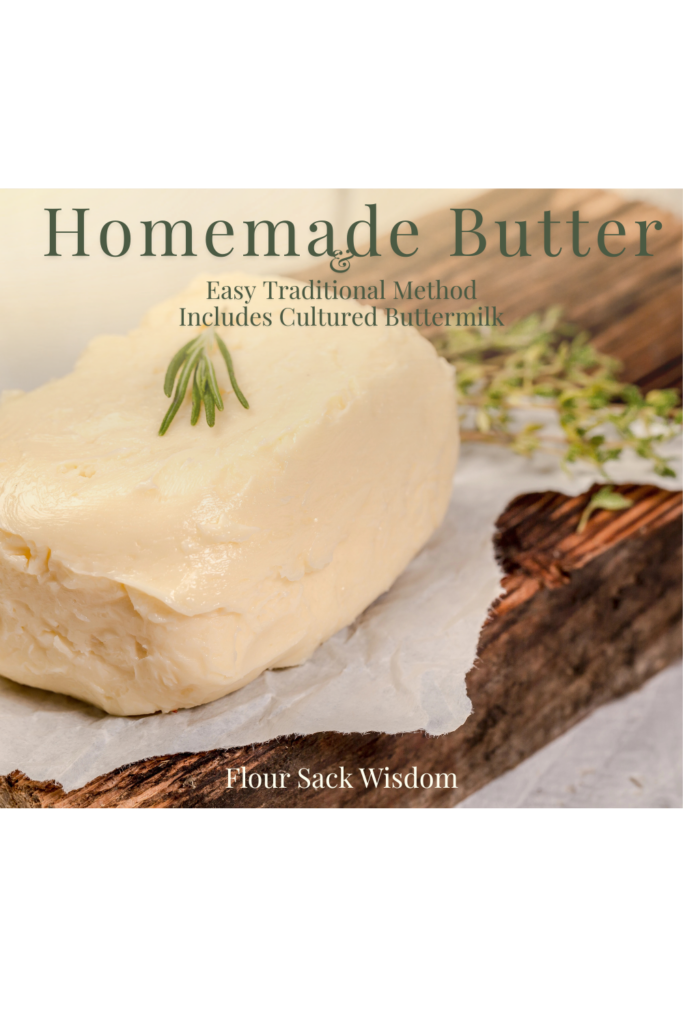
Today, butter arrives neatly wrapped in paper from the grocery store, and most people never give it a second thought. Yet making your own butter remains one of the simplest and most rewarding kitchen skills you can learn.
When I tell people I make homemade raw butter at home, the response is almost always the same.
“I’d love to do that, but I don’t have time.”
Truthfully, you probably do.
Most folks picture butter making as a long afternoon spent beside a wooden churn, laboring away in a prairie dress until their arms ache. While our grandmothers certainly knew that method well, modern homemakers have a much easier path.
With fresh cream and a food processor, you can have homemade butter on your table in less time than it takes to drive to town.
And once you’ve tasted real butter made from fresh cream, it’s hard to go back.
Why Make Your Own Homemade Raw Butter?
The obvious answer is flavor.
Butter made from fresh cream has a richness that store-bought butter simply can’t match. If the cream comes from grass-fed cows, the flavor becomes even deeper, carrying subtle notes that change with the seasons.
Spring butter often has a bright golden hue and a sweetness all its own. Winter butter tends to be lighter and milder. Just as the pasture changes throughout the year, so does the butter.
Making your own homemade raw butter also allows you to know exactly what is in it—and what isn’t.
No unnecessary additives.
No mystery ingredients.
Just cream, a pinch of salt if desired, and a little patience.
What You’ll Need
- 1 quart fresh cream
- ¼ teaspoon salt (optional)
- Food processor or high-powered blender
- Cheesecloth or flour sack towel
- Colander
- Large bowl
Before You Begin
For the best flavor, allow your cream to sit on the counter for 8 to 12 hours before making butter.
This old-fashioned practice allows the cream to gently ripen and culture, developing a richer flavor and creating the beginnings of true cultured butter.
Don’t rush this step. Some of the best kitchen traditions require nothing more than time.
How to Make Homemade Raw Butter
Pour the cream into your food processor or blender and secure the lid.
As the cream begins to churn, you’ll notice several distinct stages.
First, you’ll have cream.
Then whipped cream.
Then a thickened stage that looks slightly grainy.
And suddenly, almost like magic, the butter will separate from the buttermilk.
Once the butter has formed, line a colander with cheesecloth or a clean flour sack towel and place it over a bowl.
Pour the mixture into the colander and allow the buttermilk to drain into the bowl below.
Gather the cloth and gently squeeze the butter to remove as much buttermilk as possible.
Set the buttermilk aside. We’ll come back to that treasure in a moment.
Transfer the butter to a clean bowl and begin rinsing it with cold water.
Gently knead and press the butter while changing the water as needed. Continue until the water remains mostly clear and no additional buttermilk is released.
This step matters.
Any remaining buttermilk can shorten the shelf life of your homemade raw butter and cause it to spoil more quickly. Thoroughly washing the butter helps it stay fresh much longer.
The more you knead it, the firmer and smoother your finished butter will become.
Why Is Some Butter More Yellow Than Others?
One of the first things people notice about homemade butter is that no two batches look exactly alike.
Some are pale ivory. Others are so golden they almost glow. The difference comes down to what the cows are eating.
Fresh pasture grasses contain beta carotene, the same nutrient that gives carrots their vibrant color. When cows consume lush green forage, that beta carotene finds its way into the cream and eventually into the butter.
The result is the beautiful golden butter so many of us associate with old-fashioned farm kitchens.
Beyond color, grass-fed cream often contains higher levels of naturally occurring nutrients such as vitamin A, vitamin K2, omega-3 fatty acids, and CLA.
Since our cows are genetically A2A2 and butter is composed primarily of milk fat, homemade butter contains very little lactose and only trace amounts of milk protein compared to whole milk. Learn why A2 dairy matters to our family here.
It’s one more reminder that healthy soil, healthy animals, and healthy food are all connected.
Don’t Throw Away the Buttermilk
This may be my favorite part.
That bowl of liquid left behind isn’t waste.
It’s possibility.
Fresh buttermilk has been treasured by homemakers for generations. It adds tenderness to biscuits, richness to pancakes, and depth to cakes and quick breads.
You can also use a portion of it to culture future batches of milk, much like maintaining a sourdough starter.
In an age that celebrates convenience, there’s something deeply satisfying about finding purpose in what others might throw away.
A Little Note About Baking
If you plan to use your homemade raw butter for baking, consider setting aside a batch specifically for that purpose.
Store-bought butter often contains slightly more moisture than thoroughly washed homemade butter. Because many modern recipes were written with commercial butter in mind, you may occasionally find that homemade butter creates a slightly different result.
I’ve found it helpful to wrap baking butter in parchment paper, label it, and tuck it into the freezer until needed.
Then on biscuit mornings or holiday baking days, it’s ready and waiting.
One Last Thought
Making homemade raw butter at home is one of those things that change the way you think about your food.It reminds us that some of the most meaningful skills aren’t complicated. They’re simple, ordinary acts that connect us to generations of women who came before us.
Sometimes that’s all it takes to keep an old tradition alive.